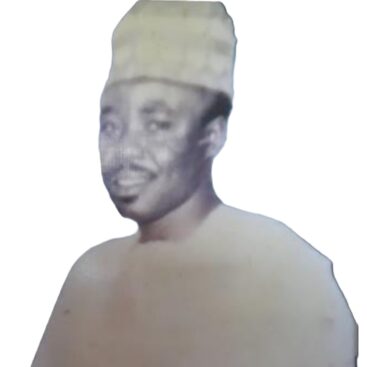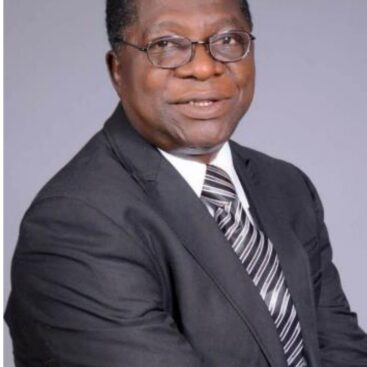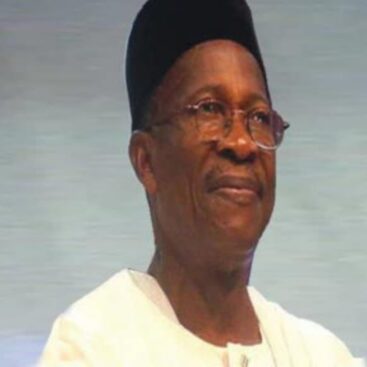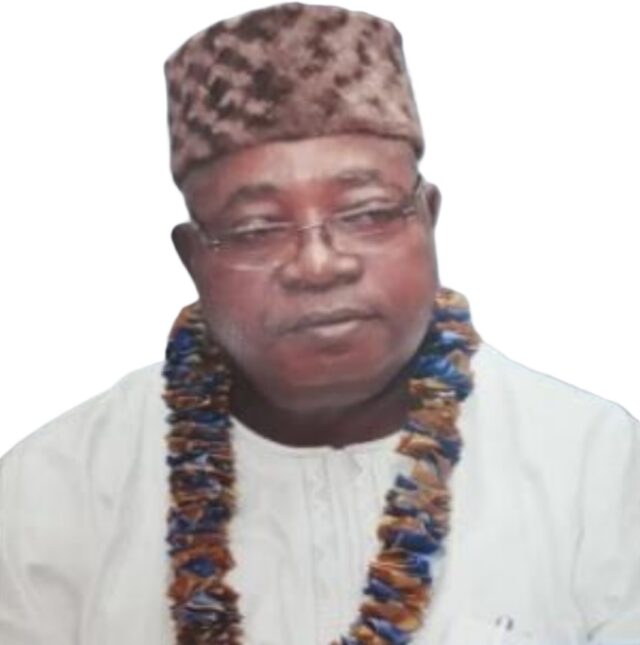
Late Comrade Elijah Okougbo
Deputy President 2004-2012
BIOGRAPHY OF LATE COMRADE (CHIEF) ELIJAH OKOUGBO
FORMER GENERAL SECRETARY, NUPENG
Comrade Chief Elijah Okougbo was a prominent former General Secretary of the Nigeria Union of Petroleum and Natural Gas Workers (NUPENG), who dedicated 33 years of meritorious service to the Union before he voluntarily retired on 31st May, 2012.
Early Life and Journey into the Labour Movement
Comrade Elijah Okougbo was born on 27th March 1945, in Ujemen-Ekpoma, Edo State, Nigeria. His tertiary education was interrupted by the Nigerian Civil War (1966–1970), during which he was enlisted into the Nigeria Police Force and deployed to the war front for combat duties alongside the Nigerian Army. After surviving the three-year conflict, he actively participated in the Federal Military Government’s post-war reconciliation, rehabilitation, and reconstruction efforts under General Yakubu Gowon and left the Police force voluntarily to pursue his dream career.
The late Comrade Chief Elijah Okougbo, a man of great intellect and a passionate advocate for writing and public speaking, pursued further education through distance learning, earning a Diploma in Journalism and Public Relations. In 1977, he obtained a degree in Industrial Relations and Trade Unionism from the prestigious University of Ibadan.
In 1979, Comrade Okougbo joined the Nigeria Union of Petroleum and Natural Gas Workers (NUPENG) as an Organising Secretary, having previously served as an Assistant Industrial Relations Officer with Nigerian Airways. His dedication and significant contributions to workers’ rights and the advancement of the Union’s objectives earned him steady career progression. In April 1982, he was promoted to Assistant General Secretary, later rising to the position of Deputy General Secretary (Operations) before being appointed as the substantive General Secretary in 2004 upon the retirement of Comrade (Hon.) Joseph Akinlaja.
Championing Workers’ Rights and the Fight for Democracy
Comrade Elijah Okougbo played a pivotal role in numerous struggles for the Union, most notably in 1993 and 1994 protests “the June 12 struggle” following the annulment of Nigeria’s democratic presidential elections held on 12th June, 1993—widely believed to have been won by Chief M.K.O. Abiola—by the then Military Head of State, General Ibrahim Babangida.
During this turbulent period, Comrade Okougbo demonstrated exceptional courage, organizing and leading decisive strikes against the military regime, which sought to suppress democracy and silence dissent. His unwavering commitment to justice was further exemplified in his relentless advocacy for the release of Comrade Frank Kokori, who was unjustly incarcerated. His efforts, alongside those of his colleagues, ensured that NUPENG remained at the forefront of the pro-democracy movement.
Beyond activism, Comrade Okougbo was a dedicated researcher and an influential voice in industrial relations. He authored and launched two books and several articles and journals on labour issues, leadership, and workers’ rights, including Strategic Issues on the Dynamics of Industrial Relations – Theory & Practical and The Memoirs of a Labour Leader, among others. Through his various leadership positions within the Union, he had the privilege of engaging with global leaders and delivering insightful presentations on critical labour and industrial relations matters on both national and international platforms.
Enduring Legacy and Final Years
On May 31, 2012, Comrade Chief Elijah Okougbo retired from active service in NUPENG, transitioning to private life, where he continued to make significant impact on his community and society at large.
On June 26, 2016, at the age of 71, he passed away after a brief illness. Until his final days, he remained a symbol of truth, integrity, hard work, and an unwavering commitment to justice.
As an astute trade unionist, Comrade Okougbo left behind a lasting legacy in labour organizing, earning him the nickname “The Organizer.” Many also referred to him as “the engine room of collective bargaining,” acknowledging his instrumental role in advancing workers’ rights and negotiations.
Rest in peace, gallant Comrade.